There’s a Place for You in the Work of Jubilee
Della Duncan, Renegade Economist
at June 6 Forum, 9-10 am Pacific Time
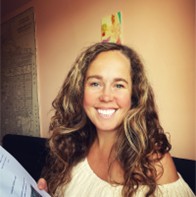 Della is a Renegade Economist based in the San Francisco Bay Area. She teaches workshops and retreats about alternative economics around the world, and offers consulting to organizations, businesses, and local governments, contributing to equitable and sustainable economic systems change.
Della is a founding member of the California Doughnut Economics Coalition, https://caldec.org/, the first state-level application of doughnut economics. Visit the website for a helpful interactive tool for more information.
Doughnut Economics was first created by British economist, Kate Raworth. This economic model balances essential human needs and planetary boundaries. Raworth is senior associate at Oxford University’s Environmental Change Institute and a Professor of Practice at Amsterdam University of Applied Sciences.
Della also hosts the Upstream Podcast, challenging traditional economic thinking through documentaries and interviews, plus a Senior Fellow of Social and Economic Equity at the International Inequalities Institute in the London School of Economics. One way she puts her ideas to work is as the Community Leader of Ingleside Community Power, a community-owned solar-power neighborhood cooperative.
If you’ve not previously participated in the Jubilee Forum, please register by sending a note to lee@jubilee-economics.org. Registration is FREE.
What Is Doughnut Economics?
GDP is not the only way to measure economic progress. The Doughnut of Social and Planetary Boundaries offers a visual monitor of progress towards the goal of meeting the needs of all people within the means of the living planet.
At its conceptual core, the Doughnut consists of two concentric rings: a social foundation, to ensure that no one is left falling short on life’s essentials, and an ecological ceiling, to ensure that humanity does not destabilize the life-supporting systems that sustain all life on Earth. Between these two sets of boundaries lies a doughnut-shaped space that is both ecologically safe and socially just: a space in which humanity can thrive.
Jubilee previously created a podcast with Della Duncan, which you can listen to here.
Jubilee Circles Visit One Another and Increase Effectiveness
What Jubilee Delegations Do
Karina Velez has not often been pictured in this newsletter or heard from. Ahhh! That is now changed. Karina, part of the San Mateo Circle, (1) directs a school with secondary level students; (2) helps make things happen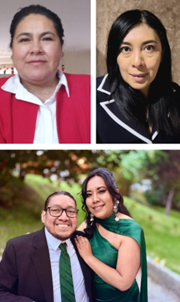 at the Dan Swanson Cultural Center in San Mateo: and (3) was part of the 25th Anniversary Delegation last October. Here she tells us what she experienced. (Note: In the photo of the San Mateo Circle participants on the right, Karina is in the upper right. Below, Karina’s voice is in the indented paragraphs.)
Participating in the Jubilee Economics Ministries (JEM) delegation to Chiapas was a profoundly human, enriching, and transformative experience.
One of the most significant moments was the exchange of experiences among the participating circles from Chiapas, the USA, and San Mateo. Hearing about the activities, projects, and efforts of each group allowed us to recognize that, although our circumstances differ, there exists a shared commitment to building communities that are more supportive, just, and humane. Every conversation was filled with lessons, empathy, and hope, reminding us of the importance of collective action and mutual accompaniment.
One morning we climbed into the van and drove an hour into the countryside. We spent a muddy day on a coffee farm operated by a single mother, Samaria. We ate the breakfast she prepared and then tried our hand at growing mushrooms. Later in the day we patted, shaped, and toasted tortillas on an open fire. We ate them for lunch.
The workshop on cultivating edible mushrooms represented a valuable opportunity to learn sustainable production alternatives. Beyond the technique, this activity demonstrated how community knowledge and organization can become tools for economic autonomy for many families.
Undoubtedly, one of the most impactful testimonies was the story of Samaria, an Indigenous woman who, with enormous strength and determination, managed to raise her daughters through constant work and perseverance…. Hearing how she took on the responsibility of the family coffee plantation and how, despite the difficulties, she transformed daily effort into a way to support and protect her family, left us all deeply impressed. This experience also increased the camaraderie and sense of community among all the participants. Sharing food, conversations, and walks made this activity warm and memorable.
The Zapatista Movement in Chiapas evolves and flexibly adjusts as necessary. In 2019, for example, they reorganized from five caracols (autonomous communities) to 12 to strengthen local autonomy. The caracols are centers of education, health, and local governance. They live in resistance to the Mexican government and create alternatives in government, healthcare, and education that better serve the Indigenous ways. Our delegation visited their campus where Zapatistas come to learn trades and the processes of democracy as practiced in the caracols. Karina calls it by its official name, CIDECI-Unitierra where she visited once before.
Returning to CIDECI-Unitierra was just as exciting as the first time. Walking through that space filled with history, hope, and learning again allowed me to admire how young people are trained in its classrooms, acquiring skills and tools to build a better future. Seeing the commitment to community education and the dignity of the people reaffirmed the importance of creating alternatives that transform lives from the ground up and collectively.
In a very special way, this trip also meant reuniting with a dear Zapatista friend, Julio, who experienced the EZLN (Zapatista) movement firsthand and accompanied Subcomandante Marcos in various processes. Hearing his experiences again, his critical perspective, and his commitment to social struggles was profoundly meaningful. His story represents an important part of the living memory of Chiapas and allowed me to understand, from a more human perspective, the roots of many social and community processes that are still present today.
The Delegation’s last stop was with Karina’s Jubilee Circle in San Mateo, Puebla.
Welcoming everyone into the Circle of San Mateo also represented a great challenge and a source of immense joy. We wanted every detail to go perfectly and for our visitors to be able to take away a piece of who we are. We wished to share with them the joy of the children from “Educar es Amar” (To Educate Is to Love), the energy and enthusiasm of the youth, as well as the courage and creativity of the artisan women. It was also important that we honor the legacy of the beloved Dan Swanson, who introduced us to the wonders of JEM and taught us the value of community accompaniment and an economy with a human face.
As this experience came to a close, I realized that there is still much to be done within my own Circle and from my own particular vantage point. This gathering profoundly reshaped me, renewing my commitment to community work, social justice, and the creation of spaces where dignity, hope, and solidarity remain the driving forces behind our actions.
Accompaniment in Successful Latino Education
with Enrique Sepulveda, UCSD Professor
Accompaniment is a core principle of Jubilee ministry and is effectively used in Jubilee Circles. It shifts relationships from telling people what they need, to being in community with them, listening as they share their needs in the group, and then, as they identify solutions, work with them to achieve just ends.
 The Jubilee Forum in May hosted Enrique Sepulveda because he has developed accompaniment in teaching. Through this pedagogical approach, Latino students went from poor learners to good ones. Enrique dismantled a lot of the dominant educational practices that serve to marginalize students and keep them from realizing their full humanity and abilities as learners. He replaced those practices with accompaniment.
Enrique himself had been a poor learner growing up in the ghetto of Stockton, California. He barely graduated from high school. His dad convinced him to go to community college instead of joining the military and there he turned around. As he says, “It began my renaissance. I read voraciously. I became a thinker and writer. I wanted to be an educator. I got my PhD in UC, Davis.”
Currently, Enrique teaches at the University of California, San Diego, in the college of community engagement. He calls himself Chicano. He explained, “Chicano is a subset of Latino and Hispanic. It describes Mexican-American political activism in the 1960s. ‘Chicano’ had referred to lowlifes and gangbangers. Always pejorative. Chicanos took the term and turned it around because they said, ‘We’re all excluded.’ Chicano reclaims Mexican-Indigenous origins and Mexican pride.
“I tell my students if they want to do social justice to look beyond the wealth, power, and whiteness to which many of them aspire. Social justice is always learned in the margins. The marginalized are our teachers if our lesson is social justice. This is where my work is. I teach the excluded how to strive for justice and identity, how to negotiate power and exclusion and still to be human and live with dignity and be whole. The work is spiritual.
I was thrilled with what I read in the book Caminemos Con Jesus, Roberto Goizueta, Toward a Hispanic/Latino Theology of Accompaniment (Orbis, 2003). because of my work on accompaniment of the educator.”
(A recording of this Forum is available free upon request.)
Donors, You’re Doing Great So Far in 2026! Summer? Help Needed
Donors, you have really come through so far in 2026. Great! Because we’ve had some attrition. With gratitude for their lives and commitment to Jubilee, we acknowledge the passing of several devoted donors in the past two years.
In Jubilee, the ministries of the Circles do great in summer, but donations typically slump. The question of summer we worry about: “Will we need to cut back on the redistributions to the Circles?” It’s a painful question which I’m sure you empathize with.
We need three things that are easier said than done. Help us if you can.
- We need new donors.
- We need support from foundations.
- We need many more smaller donations and also some larger ones. Prayerfully consider what you can do to help.